Whenever and wherever we travel we love to tell others. Some of us chat, some snap on instagram, and some write guides and books about the places we’ve been.
Travel guides may be as old as travel itself. They’re armchair travel, late night reading, and essential to any journey. They fill our bookshelves with memories of places we’ve seen. They signal future hopes.
Once published they become historical records. They tell us what places were like and what people did years later. Out of date guides and travel books taste of history, and delights and pleasures that used to be, long ago.
Without notice
Immediate changes are obvious in the pages of the Scottish Youth Hostels’ guide to Skye, published in 1975.
When the traveller “steps ashore in Skye he becomes conscious of a complete change of atmosphere. The hurrying, crowded, noisy world has dropped behind him…” Not any more the travellers won’t.
The ferry has gone. And I wouldn’t use the male personal pronoun that easily today.
An arrival on Skye happens without notice today. The visitor smoothly traverses a bridge arching over the narrow strait between the mainland and the island.
Visiting places
The older simpler life has gone with the clanking ferry that used to cross these waters. The hurrying, crowded, noisy world arrives with us.
The guide shows its age in other ways.
Among pages devoted to geology, flora and fauna, a history of farming on the island and places names too, it announces places to visit like Duntulm, the Old Man of Storr, Kilt Rock and many other places that are visited still.
Vanished times
But there’s no mention of tour buses as a way to visit the island nor the cars or camper vans crowding parking places.
In the vanished times the guide was written for, it seems only walkers, scramblers or climbers visited the island, their pursuits the the only reason for going there.
And that is perhaps the biggest change on the island, and to its youth hostels. Walkers, scramblers and climbers are fewer than they ever were and the guide is a record of a kind of travel that has disappeared.
Today’s visitors
Though buses no longer await “the steamer… or arrive shortly after”, as Flora MacLeod of MacLeod, an island chieftain claimed, Skye still has “some of the most beautiful scenery in the world”.
And while some youth hostel the guid describes in 1975 have closed, Skye’s main town now has a youth hostel to acknowledge the new and very different times and ways of travel of today’s visitors to Skye.
Notes.
Thanks to Mark Squires for the loan of his guide.
In 1975 the Scottish Youth Hostels Association had three hostels on Skye, at Broadford, Glen Brittle and Uig, and one on nearby Raasay. Between 1981 and 2007 it ran another at Armadale. Those at Armadale, Raasay and Uig are no longer open.
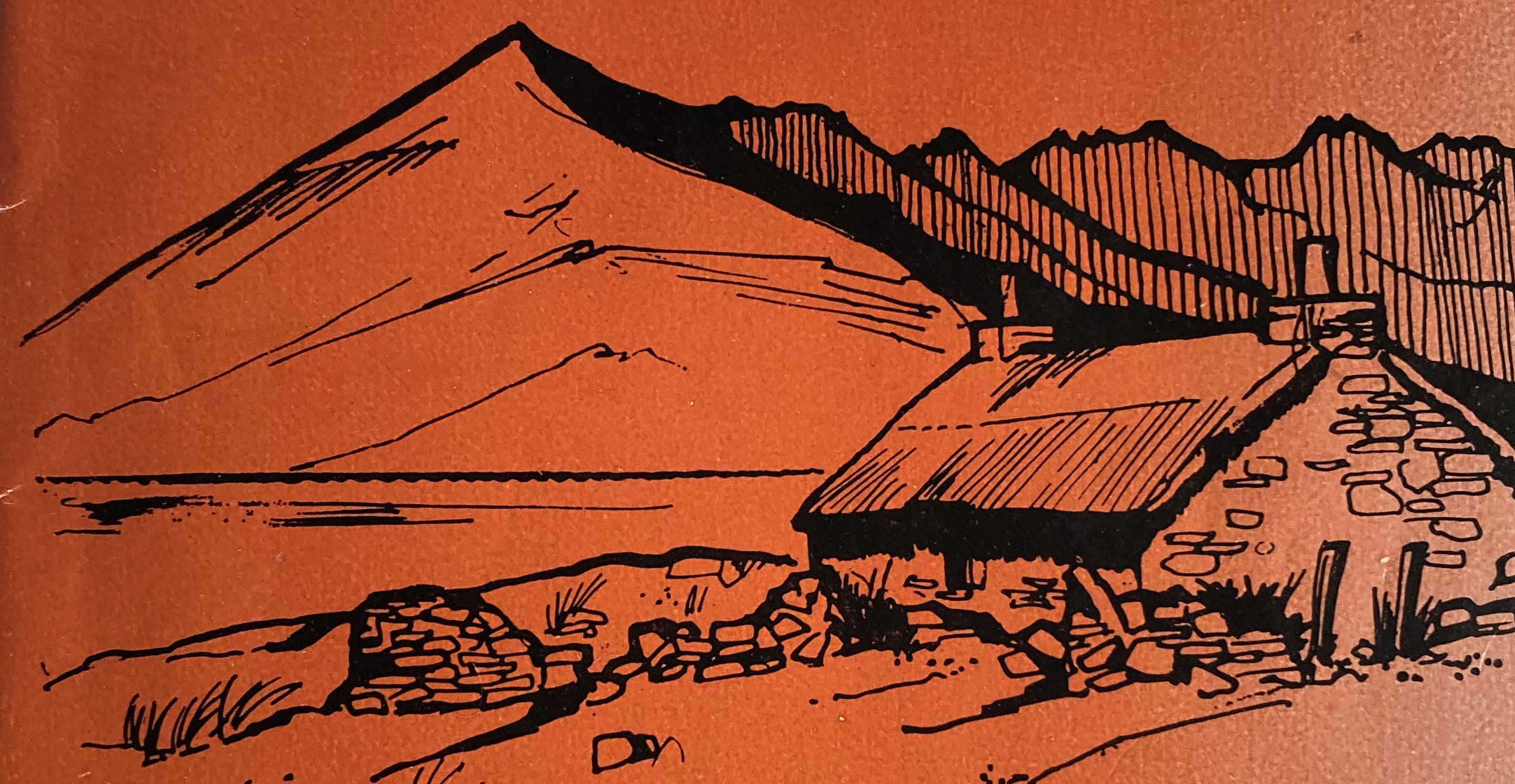
Image from the cover of the guide.
 SIMPLY HOSTELS
Leave a comment